Introduction
If you’ve ever wondered how to rank a website on Google’s first page without ads, you’re not alone. Every business owner dreams of seeing their site appear at the top of search results — without spending a dime on paid ads.
Organic rankings build trust, authority, and long-term visibility. While Google Ads can give quick exposure, organic SEO delivers consistent traffic that keeps growing over time. In this guide, we’ll walk through everything you need — from keyword research and content optimization to backlinks, UX, and technical SEO — to help your website dominate search results.
Understand How Google Ranking Works
Before jumping into strategies, it’s essential to understand how Google decides who ranks first.
Google’s algorithm uses over 200 factors to determine search rankings. Some of the most important include:
Keyword relevance
Website content quality
User engagement metrics (CTR, bounce rate, dwell time)
Backlinks from trusted websites
Mobile responsiveness and page speed
Technical SEO (sitemaps, structured data, security)
In simple terms, Google wants to show users the most relevant, trustworthy, and user-friendly content for every search query.
Start with Smart Keyword Research
To rank organically, you must target keywords people are actually searching for — but with low to medium competition.
How to Find the Right Keywords
Use free and paid tools like:
Google Keyword Planner
Ahrefs
Ubersuggest
SEMrush
AnswerThePublic
Focus on Long-Tail Keywords
Instead of targeting a broad term like “SEO,” go for specific searches such as:
“how to rank a website on Google without ads”
“free ways to increase Google ranking”
“step-by-step SEO guide for beginners”
Long-tail keywords attract targeted traffic and are easier to rank for.
Create High-Quality, Helpful Content
Google’s Helpful Content Update prioritizes value-driven content that satisfies search intent.
When writing a blog, ask: Does this article solve the user’s problem completely?
Tips for High-Quality Content:
Write original, in-depth posts (1,500–2,500 words)
Use clear headings (H2, H3)
Add internal links to other relevant pages
Include images, infographics, or short videos
Make content easy to scan with bullet points
Remember:
The more valuable your content, the more Google will trust your site as an authority.
Optimize Your On-Page SEO
On-page SEO is your foundation for ranking. Every piece of content should be optimized for both users and search engines.
On-Page SEO Checklist
Include your main keyword in:
Title tag (H1)
Meta description
First paragraph
At least one subheading
Image alt text
URL slug
Use short, descriptive URLs
Example:https://ditechsolutions.io/how-to-rank-website-on-google-first-pageAdd internal links
Link to your services pages like:
“Learn more in our Digital Marketing Solutions section.”Add external links
Reference high-authority sources like Google Search Central or HubSpot.Use schema markup
Adding structured data helps Google understand your content better — especially FAQs or articles.
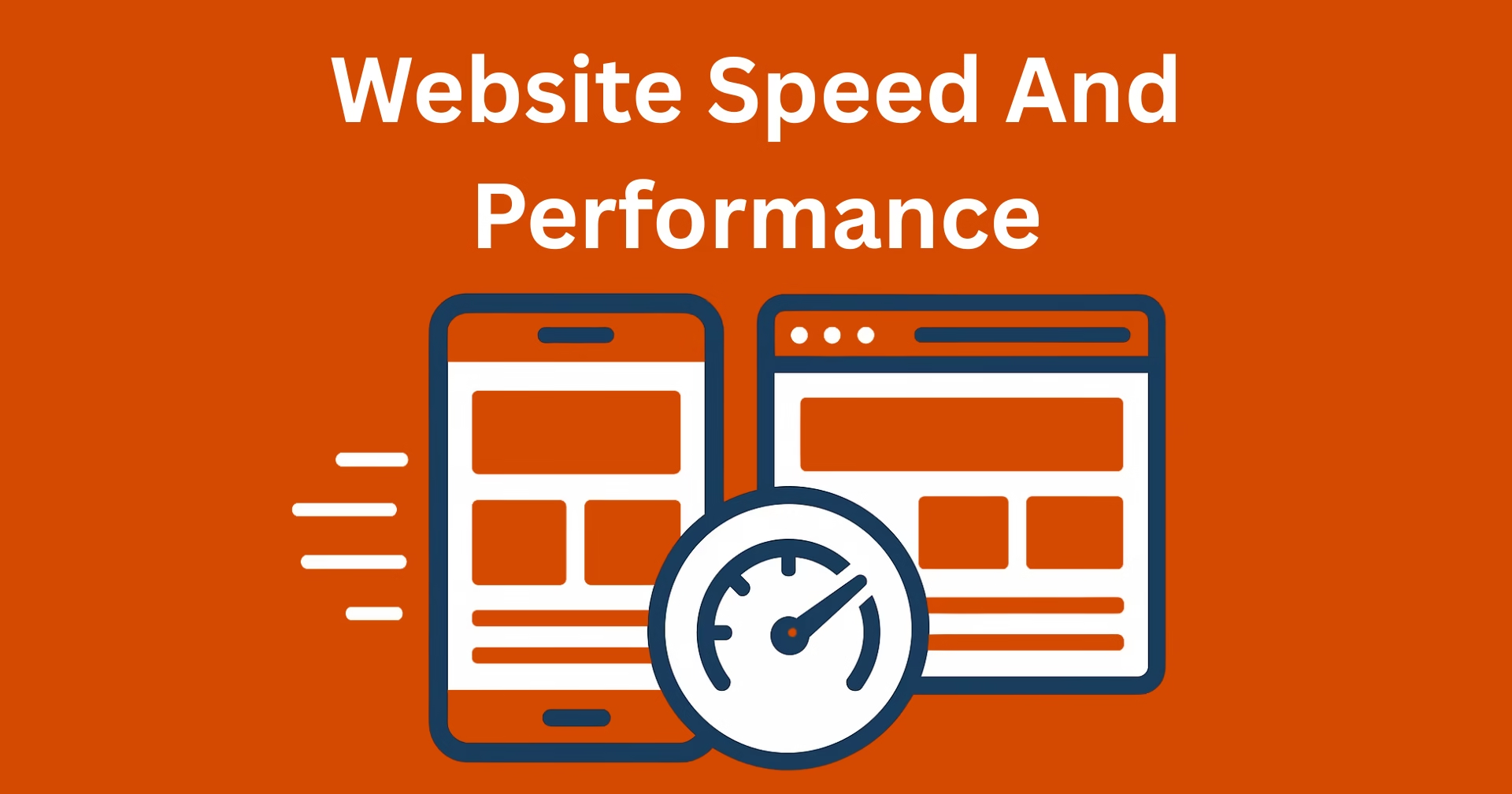
Improve Website Speed and Performance
Google ranks faster websites higher because speed affects user experience.
How to Improve Site Speed:
Compress large images (use WebP format)
Enable caching and a CDN (e.g., Cloudflare)
Minify CSS, HTML, and JavaScript
Remove unnecessary plugins
Use lightweight themes
Check your speed with Google PageSpeed Insights or GTmetrix — aim for a score above 85 on both desktop and mobile.
Make Your Website Mobile-Friendly
Over 65% of Google searches come from mobile devices.
If your site doesn’t display properly on smartphones, your rankings will suffer.
What to Do:
Use responsive design (Bootstrap or Elementor’s responsive mode)
Test your site with Google’s Mobile-Friendly Test
Keep buttons large and easy to tap
Ensure fast loading on mobile networks
A seamless mobile experience improves both SEO rankings and user satisfaction.
Strengthen Your Backlink Profile
Backlinks are one of Google’s strongest ranking signals.
A single link from a trusted, high-domain-authority site can make a huge difference.
Effective Link-Building Strategies
Guest Blogging: Write quality posts for niche-relevant sites.
Broken Link Building: Find broken links on other sites and suggest your page as a replacement.
Business Directories: Submit your website to local or industry-specific directories.
Press Releases: Share company news or achievements.
Infographics & Research Data: Create shareable visual content.
Collaborations & Interviews: Partner with influencers or digital agencies.
Avoid spammy links — focus on quality over quantity.
Optimize for User Experience (UX)
Google now evaluates how users interact with your website.
Metrics like bounce rate, session duration, and click-through rate (CTR) directly impact rankings.
Improve UX by:
Simplifying navigation
Using clean, modern layouts
Adding search functionality
Writing engaging CTAs (“Contact Us Today,” “Get a Free Quote”)
Reducing intrusive pop-ups
Remember: a website that users enjoy exploring will always perform better in search results.
Leverage Technical SEO
Technical SEO ensures Google can crawl and index your website efficiently.
Technical SEO Checklist
Submit your XML sitemap in Google Search Console
Fix crawl errors and 404 pages
Use HTTPS (SSL certificate)
Add canonical tags to avoid duplicate content
Use robots.txt to control what gets indexed
Implement structured data markup
If your site is built with WordPress, plugins like Yoast SEO or Rank Math make technical optimization easier.
Build Authority Through E-E-A-T
Google’s E-E-A-T framework (Experience, Expertise, Authoritativeness, and Trustworthiness) is key for top rankings.
How to Build E-E-A-T:
Include author bios on blogs
Add testimonials or client case studies
Get listed on Google Business Profile
Ensure consistent NAP (Name, Address, Phone) across directories
Earn mentions from other reputable sites
When Google trusts your brand, your content ranks faster and higher.
Use Analytics to Track and Improve Results
SEO is not a one-time effort — it’s a continuous process.
Tools You Must Use:
Google Analytics: Track visitors, bounce rate, conversions.
Google Search Console: Monitor impressions, clicks, and indexing issues.
Ahrefs / SEMrush: Analyze backlinks and competitor strategies.
Review your data weekly to find what’s working — and double down on those strategies.
Promote Your Content Strategically
After publishing, don’t just wait for Google to find your content — promote it actively.
Promotion Methods:
Share your blogs on LinkedIn, Facebook, and X (Twitter)
Repurpose content into short videos or carousels
Send new articles to your email subscribers
Join niche-related forums and communities (Reddit, Quora, etc.)
Add internal links from older blogs to boost visibility
Every share and mention increases your chances of ranking faster.
Avoid These Common SEO Mistakes
Even small mistakes can ruin your rankings.
Don’t:
Stuff keywords unnaturally
Buy spammy backlinks
Ignore mobile optimization
Use duplicate content
Forget about meta tags and image alt text
Skip regular site audits
Focus on white-hat SEO — it takes time but delivers lasting results.
Long-Term SEO Strategy for Sustainable Rankings
Ranking once is easy — staying there is harder.
Here’s how to maintain and grow your rankings long-term:
Publish new content regularly (1–2 blogs/week)
Refresh old blogs with updated data
Continue link-building monthly
Track competitors’ new keywords
Monitor Google updates and adjust strategies
Consistency is what separates short-term success from permanent visibility.
Conclusion
Ranking your website on Google’s first page without ads is not magic — it’s a strategic process built on smart keyword targeting, great content, technical optimization, and trust.
If you apply the techniques in this guide — from keyword research to backlinks and UX — you’ll see measurable improvement in traffic, leads, and authority.
And remember, SEO is an investment. The more value you deliver to users, the more Google will reward your efforts with top positions.
At DI Tech Solutions, we help businesses like yours rank organically and sustainably.
Contact us today to start your journey toward first-page visibility — without spending on ads!